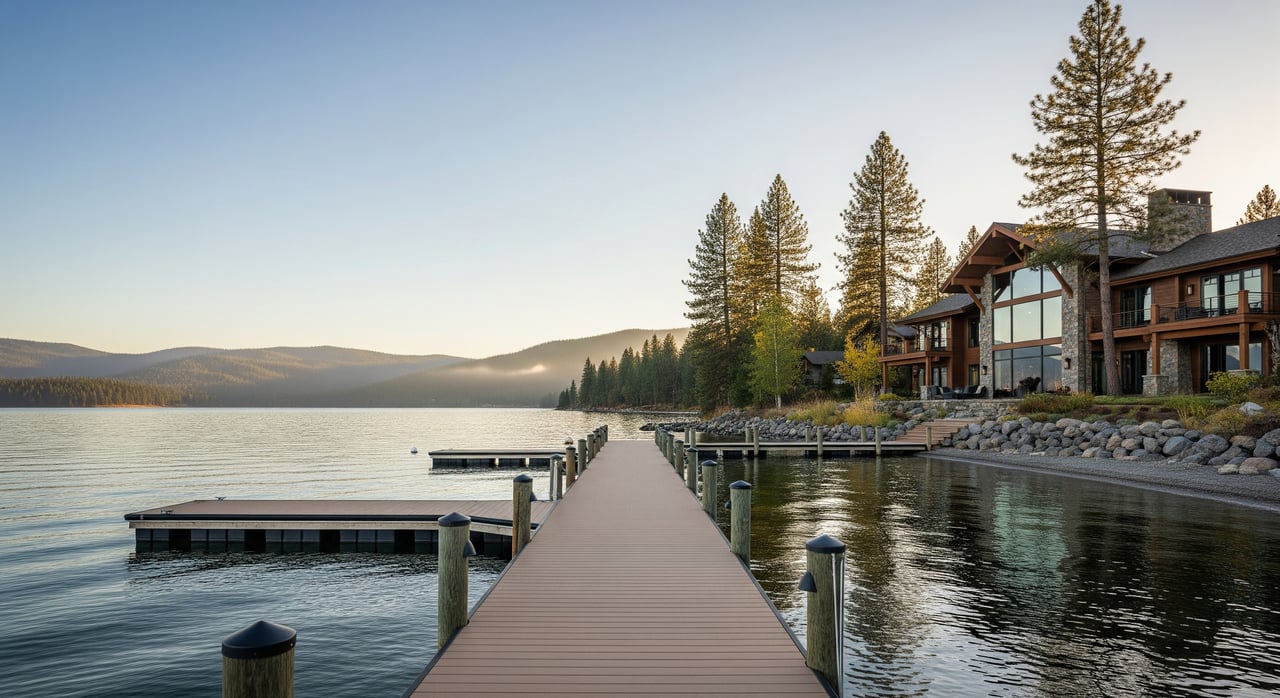
Picture sunrise coffee on a quiet dock, then an easy boat ride to dinner downtown. If Lake Coeur d’Alene is calling you, the next step is choosing the shoreline that fits your lifestyle. The lake has several distinct waterfront zones, each with its own tradeoffs for privacy, marina access, commute time, and carrying costs. In this guide, you’ll learn how the main neighborhoods differ, what to watch for in due diligence, and how to align your choice with how you plan to use the lake. Let’s dive in.
Quick map orientation
Lake Coeur d’Alene runs north to south, with the City of Coeur d’Alene at the north end and Harrison to the south in Kootenai County. The east shore is reached by State Highway 97 and tends to feel more forested with winding roads. The west side includes natural park areas and access toward I‑90 near the Spokane River mouth.
From downtown Coeur d’Alene, most city waterfront areas are 0 to 15 minutes by car. Mid‑lake east shore pockets often run 15 to 35 minutes depending on curves and road conditions. Harrison and the southern coves are usually 35 to 60 minutes or more. Many buyers also think in boat minutes to the downtown marina, which is the primary commercial hub on the water.
Waterfront neighborhood clusters
Downtown and North Lake
- Vibe: Urban‑resort energy with year‑round services, walkable dining, and a lively lakefront promenade. Public parks like Tubbs Hill add easy access to trails and shoreline.
- Marina/access: Strong access to downtown marinas, public launches, and transient moorage. It’s straightforward to boat to restaurants and events.
- Commute: Minimal, often 0 to 15 minutes to downtown amenities.
- Who it’s for: You want walkability, social energy, and maximum convenience for boating and dining.
- Price cues: City lakefront commands a premium for proximity and walkability, with fewer very large lots available.
East shore and mid‑lake enclaves
- Vibe: Secluded and wooded with a private feel. Lots can be steeper with more natural shoreline and a mix of full‑time and vacation homes.
- Marina/access: Fewer public marinas. Many homes use private docks, HOA‑shared docks, or drive to public ramps. Some associations have marinas with fees and potential waitlists.
- Commute: Often 15 to 35 minutes to downtown depending on exact location.
- Who it’s for: You value privacy, larger lots, and are comfortable with longer drives.
- Price cues: Wide range. Deep‑water dock frontage and turnkey homes push values higher, while shallow coves or raw shoreline trade price for usability.
South lake, Harrison, and southern coves
- Vibe: Small‑town charm centered around historic Harrison, a slower pace, and more rustic pockets. Many buyers choose this area for a true getaway feel.
- Marina/access: Harrison and smaller community marinas serve the south end. Full‑service options are fewer than downtown, so plan fueling and provisions.
- Commute: Longest, often 35 to 60 minutes or more to downtown Coeur d’Alene.
- Who it’s for: You seek relatively more affordable waterfront compared with downtown, private coves, and a quieter rhythm.
- Price cues: Often more attainable than north‑end city frontage for similar shoreline width, but prime deep‑water dock sites and remodeled homes still command strong values.
West shore and park adjacency
- Vibe: Natural and recreational with adjacency to large public lands and park areas. Development can be limited or older in places.
- Marina/access: Expect fewer private services near parks. Public access points are available, but boaters should plan ahead for fuel and slips.
- Commute: Varies. Western points with I‑90 access can be 15 to 30 minutes to town, with farther park edges longer.
- Who it’s for: You put a premium on nature, trails, and a quieter shoreline experience.
- Price cues: Values reflect the rarity of private shoreline and proximity to key boating corridors.
Lifestyle tradeoffs to weigh
Waterfront type and daily use
- Straight shoreline with a private dock: Best for frequent boaters who want easy in‑and‑out.
- Shallow coves and sandy pockets: Often great for swimming, lounging, and kids, though some limit boat draft.
- Bluff or terraced sites: Big views and dramatic settings, but consider stairs or trams to reach the dock and water.
Dock and moorage options
- Deeded private dock: Most convenient. Confirm permits and transferability.
- HOA or community docks: Useful when slips are available. Expect fees and possible waitlists.
- Marina slips: Adds recurring cost and potential wait times. Verify slip size, shore power, and rules.
Ownership versus access
- Riparian rights: Confirm whether the property includes deeded shoreline rights or only an easement to the water.
- Adjacent public shoreline: Great for recreation and open space, while privacy and activity levels can vary.
Year‑round access and services
- Roads and winter care: Some roads are rural or steep. Ask about snow removal and emergency access.
- Utilities: Many lake homes use well and septic. Review well logs, septic capacity, and pumping records.
Risk and insurance
- Flood exposure: Low‑lying shoreline can fall in FEMA flood zones. Factor in potential insurance costs.
- Wildfire: Wooded, steep parcels, especially along the east shore, may face higher wildfire risk. Plan for defensible space and insurance requirements.
Shoreline rules and permits
- Dock and shoreline work: Dock permits, setbacks, retaining walls, dredging, and bulkheads can require county and state approvals. Build in timelines for review.
- Environmental programs: Expect rules about aquatic invasive species and boat decontamination. Stay current with local lake management guidance.
Taxes and carrying costs
- Property taxes and assessments: These vary by parcel. Also expect higher ongoing costs for dock upkeep, seawalls, erosion control, and shoreline landscaping.
How to research pricing and value
- Start with recent closed waterfront sales for Lake Coeur d’Alene in the North Idaho MLS and compare by neighborhood cluster. Look at price per linear foot of shoreline alongside price per finished square foot.
- Note seasonal patterns. Inventory and activity can swing in second‑home markets. Compare rolling 12‑month medians to the prior year for a clearer trend.
- Expect premiums in the downtown and north‑end corridors for proximity and walkability. East shore and private coves vary widely with dockability and slope. South lake often offers more shoreline for the dollar, while prime, deep‑water properties still reach top‑tier valuations.
- For a live read on demand, confirm slip availability and wait times with local marinas and HOAs, and validate any price talk with current MLS data before you write an offer.
Buyer due diligence checklist
- Confirm deeded shoreline and riparian rights versus a shared or community easement.
- Verify dock status: existing permits, condition, and whether rights transfer on sale. Ask about HOA or marina slip waitlists.
- Pull county and state permit history for docks, seawalls, retaining walls, and any dredging or shoreline work.
- Assess utilities: municipal versus well and septic. Obtain septic inspection and pumping records and review well performance.
- Clarify access: year‑round road maintenance plans, winter plowing, and emergency vehicle accessibility.
- Check FEMA flood maps and understand lender or insurer flood insurance requirements if applicable.
- Evaluate wildfire exposure, local fire district guidance, and insurance availability for high‑risk parcels.
- Review shoreline setbacks, aquatic plant management rules, and any lake management or weed control program requirements.
- Confirm current property taxes, assessment history, and any local improvement districts with the county.
- Get quotes for homeowner and watercraft insurance, plus any special coverage for docks or seawalls.
- Order a recent shoreline survey and thorough title review for easements or shared access agreements.
- Understand use rules: short‑term rental allowances, HOA covenants, and any dock use limitations.
Work with a lake‑savvy advisor
Lakefront success starts with matching your lifestyle to a shoreline and then backing that choice with solid due diligence. You want a seasoned guide who understands the nuances of docks, permits, winter access, and the premium drivers for each cove. With deep North Idaho roots, development know‑how, and a boutique, concierge approach, we help you weigh tradeoffs and move confidently.
If you’re considering lakefront in Coeur d’Alene or anywhere in Kootenai County, reach out to Kate & Chris Neu for a private consult and a custom search plan tailored to how you live on the water.
FAQs
What does a private dock cost on Lake Coeur d’Alene?
- Costs and permits vary by size, location, and site conditions; get estimates from local marine contractors and confirm requirements with county and state agencies before you budget.
Do Coeur d’Alene waterfront homes include a boat slip?
- Not always; verify the deed for dock rights, review HOA documents for shared slips, or confirm any marina agreement since availability and fees can vary.
Is the south end near Harrison more affordable than downtown?
- Often yes for comparable shoreline width, though prime deep‑water sites and updated homes in the south can still reach high values depending on features and dockability.
What ongoing costs are unique to lake living here?
- Plan for dock maintenance, shoreline erosion control, possible marina or HOA fees, higher insurance, and well and septic servicing where applicable.
How do you verify legal lake access on a property?
- Review the deed for riparian rights, check recorded easements with the county, and confirm dock and shoreline permits with local and state permitting offices before you commit.