"There's just been deferred maintenance and literally degradation of the walkway itself that has happened over the last 10 or 15 years," Tom Torgerson told the Coeur d'Alene Parks and Recreation Commission at a special meeting on Tuesday, Sept. 29.
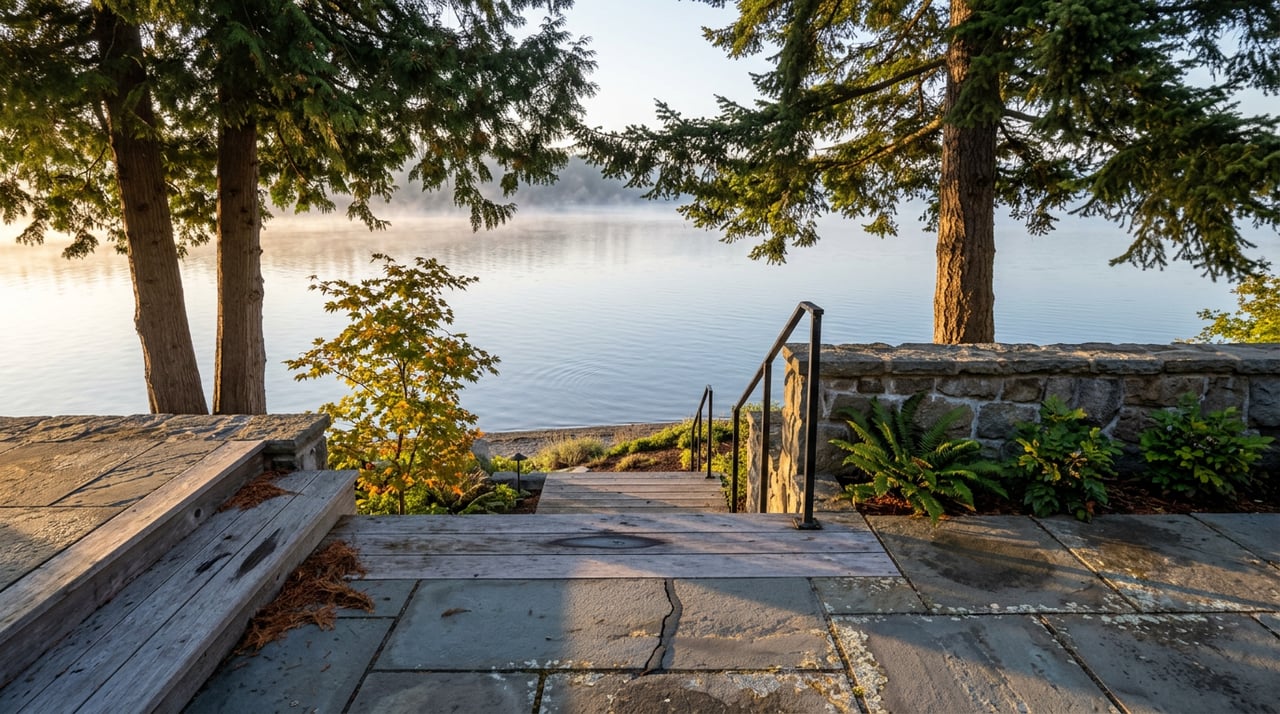
He was talking about the City Park waterfront promenade between Independence Point and Park Drive. You can see what he means on any walk along it. Trees used to stand in planters along the waterfront. They died, and the planters are still empty.
Next Door Got Its Rebuild a Dozen Years Ago
The downtown lakefront is really two public spaces side by side, and they have aged very differently. McEuen Park, with the Tubbs Hill trailhead and a stretch of the Centennial Trail running through it, was rebuilt as a 20-acre, $20 million project and dedicated on May 24, 2014. That rebuild included a new pedestrian promenade on Front Avenue.
The City Park shoreline has a much older record. According to the Museum of North Idaho history cited by the Coeur d'Alene Press, the park was first called Blackwell Park. Its first seawall was rough wood and timber tied to the industrial and lumber work along the shore. By 1976, stone and concrete had replaced it. Torgerson dates the walkway's decline to the last 10 or 15 years of deferred maintenance.
So downtown has a lakefront where one half was rebuilt from scratch in the 2010s and the other half has spent roughly the same stretch wearing down. The new proposal is about evening that out.
A Lot of Feet on Old Concrete
The age of the walkway matters because so many people use it. The Press, citing an economic impact study by the North Idaho Centennial Trail Foundation and the University of Idaho, calls the promenade one of the most heavily used pedestrian corridors in Idaho, with an estimated 800,000 to 1 million users a year. It links two of the city's main hubs, downtown and North Idaho College, and carries walkers, joggers, cyclists, skateboarders, rollerbladers and tourists.
Torgerson and Coeur d'Alene resident Doug Eastwood gave the commission this list of problems:
- Aging infrastructure
- Damaged concrete
- Outdated furnishings
- Lost landscaping
Eastwood was blunt about the gap between how the place is used and how it looks. "It's some of the most valuable property and highest used property probably anywhere in the Northwest and it looks terrible," he said.
Torgerson put it more gently. "It is unbelievable the amount of lakeshore frontage the public has access to, and that happens to be the focal point," he said. "We just want to give it the respect that nature deserves."
The People Pitching It Built the Trails Around It
Eastwood knows this part of town well. A 2013 Press profile says he joined the city in 1978 as a landscape gardener and later became Parks Director. He retired after 35 years, and the profile credits him with work on the Centennial Trail, Person Field and McEuen Field. Now he's back as a resident, pushing to fix the stretch of shoreline that links several of those projects.
The early ideas he shared with the commission are modest and physical:
- Wider areas for people to walk and move through
- New benches and other site furnishings
- A plan for replacing trees
The Press ran an AI-generated concept image of what a revitalized promenade could look like. It's an illustration, not a design. No plan or budget has been approved.
The proposal is mainly about process. Torgerson and Eastwood asked the commission to form an ad hoc committee that would develop concepts and recommendations, line up funding and donations, and then bring cost estimates back to the commission. In an earlier commission discussion, city staff floated restarting informal workshops on the seawall and promenade to work out committee membership and funding. A Citizen Portal summary of that session says Torgerson, whom it calls a developer, urged a privately driven approach. Commissioners stressed that the promenade is city property and has to go through public processes. A committee that brings together private fundraising and city oversight is how those two views fit together.
The groups discussed as possible members show how wide that net may be:
| Group | Role it would bring |
|---|---|
| Parks and Recreation Commission | The body the committee reports to |
| Parks Department staff | Day-to-day upkeep of City Park |
| City engineering staff | Seawall and walkway infrastructure |
| Rotary Club | Civic service organization |
| Panhandle Kiwanis | Civic service organization |
| Coeur d'Alene Resort | Neighboring waterfront business |
| Community stakeholders and business representatives | Broader public input |
Parks and Recreation Director Adam Rouse supports it. "I am looking forward to working with the committee to renew and enhance one of the most valuable and beautiful pieces of city property," he told the Press. "This is a great opportunity to partner with the community to bring the City Park waterfront back to life."
How the Calendar Could Play Out
Only one date is firm. The commission plans to formally create the committee at its regular meeting on Oct. 19. After that, the timeline depends on what the committee recommends and whether the money comes together.
| Step | Status as of early October 2026 |
|---|---|
| Proposal presented to commission | Done, Sept. 29 special meeting |
| Committee formally created | Scheduled for Oct. 19 regular meeting |
| Concepts, recommendations and funding sources | Committee's job once formed |
| Cost estimates shared with commission | After concepts are developed |
| Project goes out to bid | Mid-summer, if the project moves forward |
| Construction begins | After Labor Day, if the project moves forward |
Officials picked the post-Labor Day start because the park is less busy then. No year has been attached to either step. Until a committee exists and cost estimates are in, any year would be a guess. For anyone on the walkway this fall, it will look the same as it did this summer, empty planters included.
Meanwhile, the Trail System Is Getting Repaved in Pieces
There's a useful comparison a few miles west. A two-mile stretch of the North Idaho Centennial Trail, from Pleasantview Road east toward Spokane Street, is closed Sept. 23 through Oct. 14 so crews can replace deteriorated asphalt. Kootenai County put the project cost at $280,051. The county's bid document lists Interstate Concrete & Asphalt as the bidder, estimates completion on Oct. 16, and sets a detour on Riverbend Avenue between Pleasantview Road and McGuire Road. East of McGuire Road there's no workable detour. No reopening notice had been posted as of this writing. If you ride that segment, check before heading out after the 14th.
How that repaving was paid for matters for the promenade. KHQ reported that funding came from Kootenai County, Post Falls, Coeur d'Alene, the trail foundation and a state recreational trail grant. A mix of public money, a foundation and a grant got that segment rebuilt, and it's the same kind of patchwork the promenade committee is being asked to assemble. The Centennial Trail Foundation already shows up in both stories, as a funder of the trail work and as co-author of the study behind the promenade's user count.
The Parks and Recreation Commission takes up the committee at its Oct. 19 regular meeting. Meeting minutes are posted on the City of Coeur d'Alene's commission page.
If you own a home within walking distance of City Park and want to know how a better waterfront could factor into what your property is worth, Kate & Chris Neu can help you get a clear read on it. Request a Free Instant Valuation, and we'll keep you posted as the promenade plans take shape.