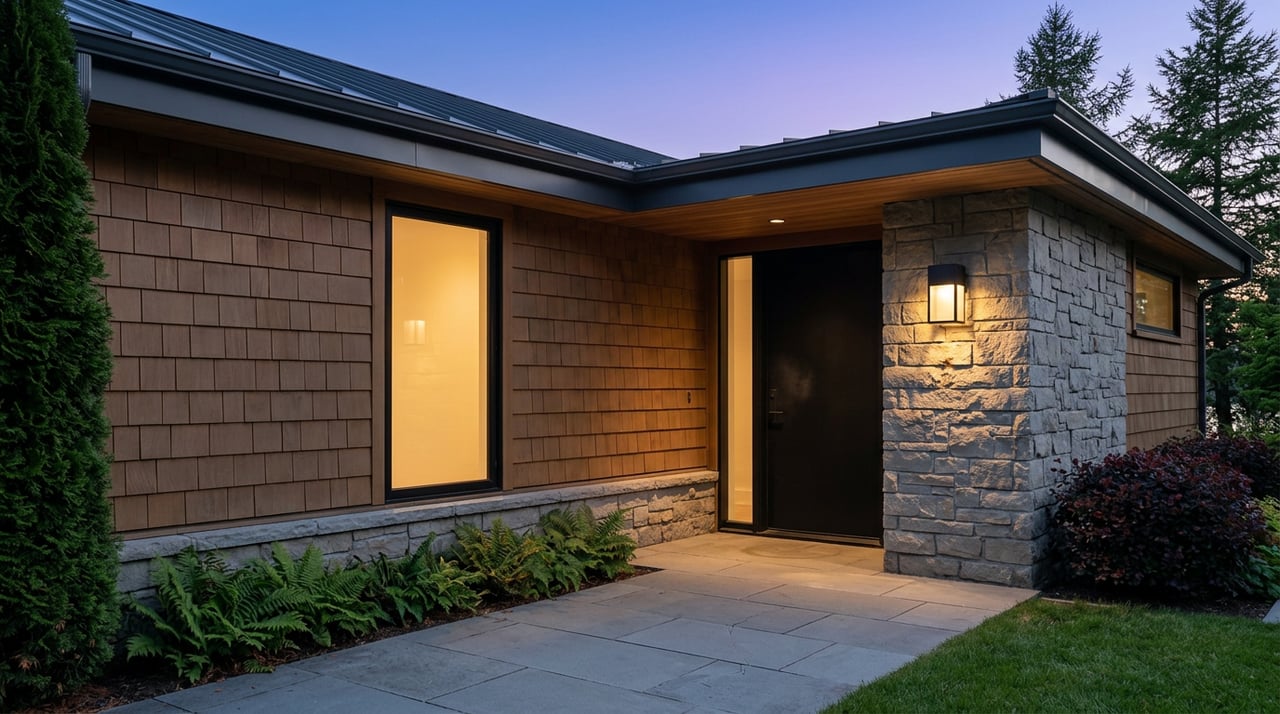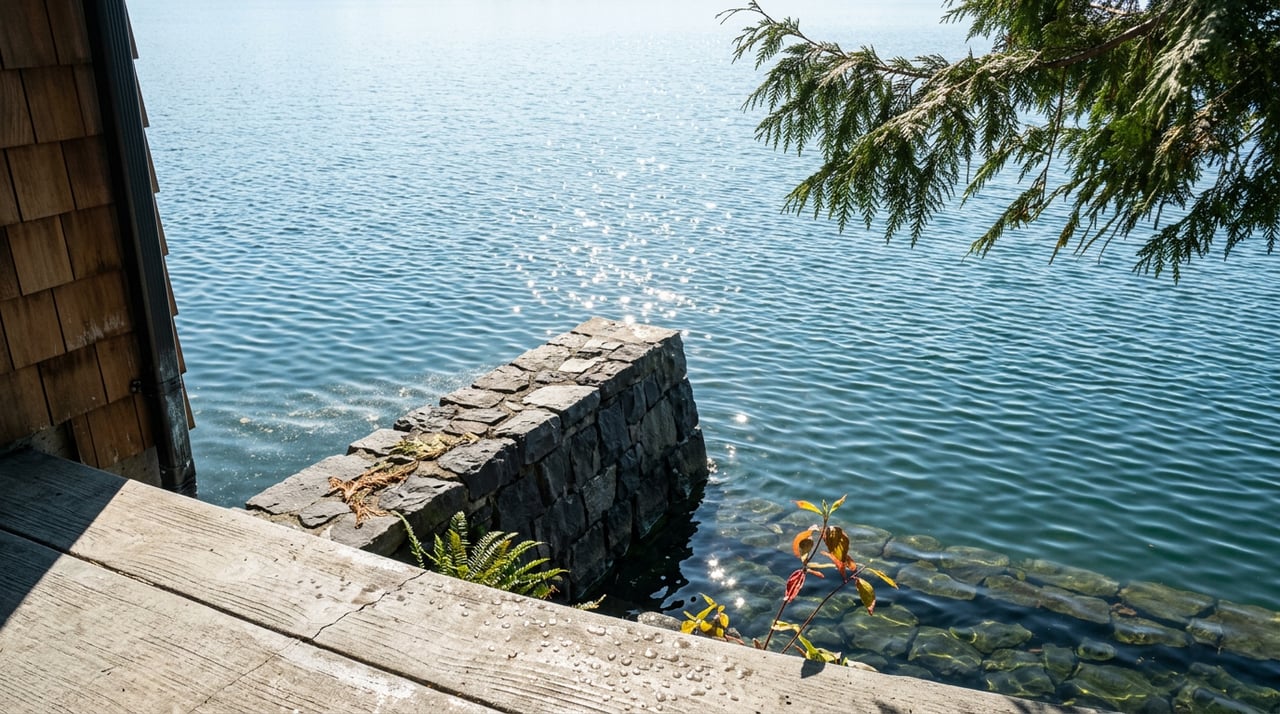
Picture two showings on the same Tuesday. In the morning, a couple tours a finished home on Hayden Lake with a covered boat slip and a dock permit already in place. It's priced at market, three more showings are booked before the weekend, and it's under contract by Friday. That afternoon, the same couple drives out to a bare lot with a comparable lake view and a similar asking price. It's been listed since spring. Nobody has walked it in three weeks.
Same buyers, same budget, roughly the same geography. So why does one property move in days while the other just sits there?
It isn't a lack of interest in land. Kootenai County has plenty of people who want acreage, a build site, or room to develop. The real answer is that a finished waterfront home and a vacant lot aren't competing in the same market at all. They run on two different financing tracks, and only one of those tracks lets a buyer move quickly.
What the Numbers Actually Say
The Coeur d'Alene Press reported on August 19 that single-family home sales in Kootenai County reached 1,499 through July, a 6.9% increase from the same period a year earlier. Active listings sat at 1,124 as of August 5, up slightly from the prior month but still down 9.6% from a year ago. The median sales price held at $565,000 for the second straight month, up 3.8% year over year.
Jared McFarland, an agent with Century 21 Beutler and Associates, was quoted describing the split that matters most for anyone shopping land or waterfront right now:
"Vacant land seems to be the slowest segment of the market, and while waterfront inventory has remained fairly low, waterfront sales have been significant."
That's a strange pairing on its face. Waterfront is the scarcest, most competed-for category in this county, and it's still closing. Land, which should be easier to find and easier to buy since there's no structure to negotiate over, is the category moving the slowest.
The Same Pattern, One Month Earlier
This wasn't a one-month blip. A July 18 report in the same paper, covering activity through June, showed 1,246 homes sold, a 6.6% increase from the year before, with active listings down 10% year over year. McFarland's comment that month was nearly identical: he said vacant land has remained comparatively slow to sell, while affordable homes continue to see strong demand.
Two consecutive monthly reports, two months apart, both flagging the same divide. That consistency is what makes this worth digging into instead of writing off as noise.
Two Different Loans, Two Different Speeds
Here's the part that doesn't show up in a median price chart. A buyer purchasing a finished waterfront home can walk into a bank and apply for a standard 30-year mortgage. The 30-year fixed rate stood at 6.54% the week of July 18, according to Bankrate, up slightly from 6.52% the week before. The home itself serves as collateral, the appraisal has plenty of comparable sales to lean on, and the closing timeline is predictable enough that most buyers know roughly what to expect from offer to keys.
A buyer purchasing raw land or an unimproved lot faces a different set of rules entirely. Land loans typically require a down payment of 20% to 50%, depending on whether the parcel has utilities and road access or is truly raw acreage. Rates on those loans generally run 1 to 3 percentage points above a conventional mortgage, which puts many land loans in the 7.5% to 9.5% range in the current environment. Terms are shorter too, often 5 to 15 years instead of 30, and credit requirements tend to run higher because there's no structure for a lender to repossess and resell if the loan goes bad.
That gap explains a lot. A finished home draws from the entire pool of mortgage-qualified buyers, which is large and moves fast. A vacant lot draws from a much smaller pool: buyers with enough cash to cover a steep down payment, or the patience to negotiate seller financing, which remains common in Idaho land deals precisely because bank financing is harder to secure. Fewer qualified buyers means longer time on market, even when the underlying appeal of the land itself hasn't changed.
What This Looks Like at the Closing Table
The difference plays out in ways a buyer only notices once they're actually comparing offers side by side.
- On a finished waterfront home: a conventional mortgage, a familiar appraisal process backed by nearby comparable sales, and a closing that typically wraps up within 30 to 45 days.
- On a vacant lot or raw acreage: a much larger down payment, a rate premium over the home-loan rate, a shorter loan term, and often a seller-financing conversation because a traditional lender either declined the file or offered terms that didn't pencil.
Neither path is better or worse. They're just different transactions wearing the same "real estate" label, and treating them as interchangeable is where buyers get tripped up.
Why the Split Matters If You're Choosing Between a Lot and a Finished Home
If you're comparing a $600,000 waterfront lot to a $600,000 finished waterfront home, the sticker price tells you almost nothing about what the next 60 days will actually feel like. The home buyer is competing against other mortgage-qualified shoppers in a fast-moving pool. The lot buyer is competing against almost no one, but is also facing a financing conversation that takes longer to structure and often costs more per point of interest.
For a buyer who wants to build a custom home eventually, that tradeoff can still make sense. You're not paying for someone else's finish choices, and land in Kootenai County remains, relative to finished construction costs, one of the more approachable entry points into lake or mountain living. But it means budgeting time differently. A land purchase followed by a construction loan is a longer runway than writing an offer on a move-in-ready home, and the financing friction is exactly why.
For a developer or investor looking at acreage with an eye toward subdivision or resale, the slow-moving land segment isn't necessarily bad news. Less competition among buyers for land means more room to negotiate on price and terms, especially with a seller who has already sat on a listing for several months and may be open to carrying paper.
The Market That's Left After the Rush
Kootenai County's finished-home market has settled into something steadier than the frantic pace of a few years ago, when remote workers were bidding up listings in days. What's left is a market anchored by buyers who qualify for conventional financing and are looking for turnkey lifestyle properties: retirees, relocating families, and second-home buyers drawn to the lake and mountain setting. That's the pool keeping waterfront sales significant even with inventory running low.
Land buyers are a smaller, more specialized group by comparison, often self-selecting into cash purchases, seller financing, or build-ready plans they've already worked out with a lender who specializes in construction-to-permanent loans. It's not that fewer people want land. It's that fewer people can move on land as fast as they can move on a house, and the market reflects that difference month after month.
A Few Questions We Hear From Land Buyers
Can I get a conventional 30-year mortgage on a vacant lot in Kootenai County? Generally no. Vacant land is financed through land loans or lot loans, which carry shorter terms, larger down payments, and higher rates than a standard home mortgage. Some lenders offer a path to convert a lot loan into a construction loan once you're ready to build.
Is seller financing common for land in North Idaho? It's a frequently used option, particularly for raw acreage that doesn't qualify for conventional bank financing. Terms vary by seller, so it's worth asking directly whether a seller would consider carrying the note, especially on a parcel that has been listed for a while.
Does the slow land market mean prices are dropping? The reports so far this year describe slow absorption, not falling prices. A lot sitting on the market longer reflects fewer financing-ready buyers moving through it, not necessarily softening value.
If you're weighing a waterfront lot against a finished home, or trying to figure out what a piece of Kootenai County acreage is actually worth to build on, that's exactly the kind of question where local, transaction-level knowledge matters more than a median price chart. Kate & Chris Neu at Idaho Legacy Property bring hands-on land and development experience alongside full-service representation for lakefront and mountain properties across North Idaho. Request a Free Instant Valuation to start the conversation about what your property, lot or home, is actually positioned to do in this market.